
Why the Average Photographer Becomes More Successful Than You (If You're 35–40)
Are you a 35–40-year-old photographer with years of experience but slow business growth? Discover why average photographers are becoming more successful and how mindset, decision-making, and adaptability impact your photography career. Learn the 6 key reasons holding experienced photographers back — and how to restart your growth in today’s competitive photography industry.
4/2/20264 min read
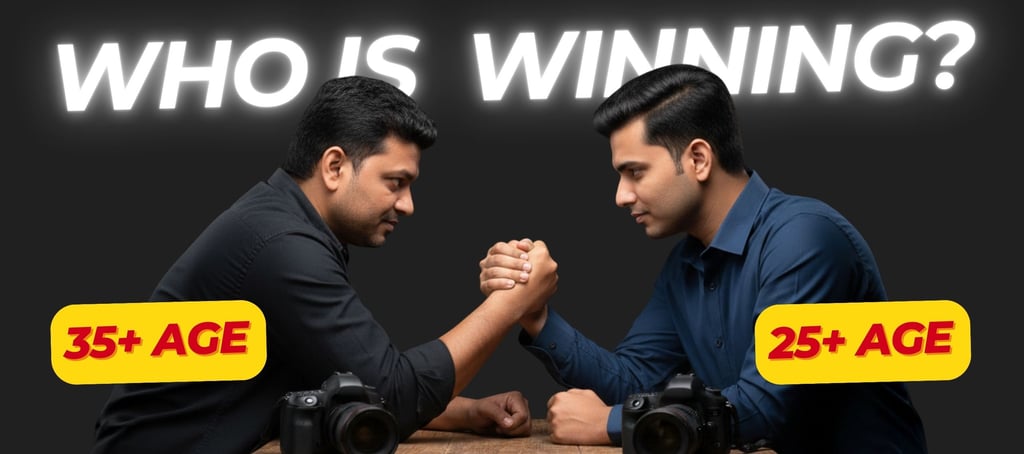

Why the Average Photographer Becomes More Successful Than You (If You're 35–40)
Photography is a skill that improves with time. The more experience you gain, the better your work becomes. So logically, photographers with 10–15 years of experience should be more successful, more visible, and earning more than those who just entered the industry. But in reality, the opposite often happens.
Many photographers in their mid-30s or early 40s find themselves stuck. They have strong portfolios, solid technical knowledge, and years of real-world experience. Yet their growth slows down. At the same time, younger or average photographers start growing faster, becoming more visible, and earning more.
This situation can feel frustrating and confusing. You start asking yourself what they know that you don’t. The truth is, the difference is rarely talent. In most cases, the difference lies in mindset, decisions, and adaptability. Here are the six major reasons why an average photographer may grow faster than you after the age of 35.
1. Comfort Zone Becomes Stronger
After the age of 35, life becomes more stable. You already know how to handle clients, manage shoots, and deliver quality work. Your workflow becomes predictable, and you feel confident in your abilities. This stability creates comfort, and comfort often feels safe and satisfying.
However, the photography market does not stay stable. Trends change, platforms evolve, and client expectations shift constantly. While the industry keeps moving forward, many experienced photographers continue using the same methods that worked in the past.
Average photographers, on the other hand, are often uncomfortable. They are still exploring, experimenting, and trying new approaches. Because they are not settled, they remain open to change and growth.
Comfort slowly becomes a silent growth killer. When you stop experimenting and stop taking risks, growth naturally slows down. The moment you stop feeling nervous about trying something new, you may also stop evolving professionally.
2. Experience Turns Into Ego
Experience is powerful, but it can also become limiting. There are two types of experience. One helps you learn continuously, while the other becomes part of your identity. When experience becomes identity, learning slows down.
Many photographers with long careers begin to think of themselves as senior professionals. This identity makes it harder to accept new ideas, trends, or learning opportunities. Subconsciously, you may begin to defend your current way of working instead of improving it.
Average photographers do not carry this burden. They have nothing to defend, so they remain open to learning. They watch tutorials, try new editing styles, experiment with marketing, and explore new tools without hesitation.
The difference becomes clear over time. One photographer keeps learning, while the other keeps protecting their past achievements. Growth happens when learning continues, not when experience becomes a shield.
3. Hard Work Replaces Smart Growth
Many experienced photographers work extremely hard. Long wedding days, late-night editing, client coordination, and last-minute requests become part of daily life. Hard work becomes routine, and it feels like progress.
But hard work and growth are not the same. Hard work keeps you busy, while growth requires building systems. Many average photographers spend time on business processes rather than just creative work.
They build client management systems, revise pricing strategies, create templates, and streamline workflows. These tasks may seem boring, but they create long-term growth.
Experienced photographers often remain busy in creative execution. They focus on shooting and editing but ignore business structure. Over time, the photographer who builds systems grows faster than the one who only works harder.
4. Fear of Becoming a Beginner Again
After years in the industry, starting something new can feel uncomfortable. Learning reels, understanding AI tools, running ads, or building personal branding may feel like beginner-level tasks. This creates hesitation.
Many experienced photographers avoid learning new platforms because they don’t want to appear inexperienced. This fear slows down adoption of new opportunities.
Average photographers do not worry about this. They create imperfect content, experiment with new tools, and fail without hesitation. Their willingness to look like beginners allows them to grow faster.
Growth often requires becoming a beginner again. When you accept learning, even after years of experience, you open new doors. Avoiding beginner status may protect your ego, but it limits your future.
5. Slow Decision-Making
Younger photographers often act quickly. They get an idea and implement it within days. They test, adjust, and improve continuously. This speed creates momentum.
Experienced photographers tend to overthink. They analyze, wait for the right time, and postpone decisions. Sometimes they wait for the next season, the next project, or even the next year.
Slow decisions lead to slow results. The photography industry rewards those who move quickly and adapt to change. Speed does not always mean perfection, but it creates opportunities.
The faster you test ideas, the faster you learn what works. Growth becomes natural when decision-making becomes quicker and more action-oriented.
6. Choosing Stability Over Growth
As responsibilities increase with age, stability becomes important. Many photographers focus on maintaining steady work rather than expanding their business. The goal shifts from growth to survival.
Average photographers often think about scaling. They consider building teams, creating brands, improving positioning, and expanding services. Their mindset is focused on growth rather than stability.
There is nothing wrong with wanting stability, but focusing only on stability can slow long-term success. Growth requires calculated risks and expansion planning.
The difference between survival and growth becomes visible over time. One photographer maintains the same level, while the other gradually builds a larger and stronger business.
The Self-Realization Moment
Take a moment and ask yourself a simple question. If you were 25 today, would you be satisfied with your current mindset? Or would you feel that you are playing too safe?
Sometimes, experience brings wisdom, but it can also bring caution. Too much caution limits growth. The key is to combine experience with curiosity and hunger for improvement.
Your experience is valuable, but only when it helps you build the future. When experience is used only to defend the past, growth slows down.
Final Thoughts
Average photographers are not necessarily smarter or more talented. They often move ahead because they remain open, curious, and action-oriented. They keep learning, experimenting, and building systems.
If you are 35 or 40, your age is not the problem. Your experience is actually your biggest advantage. The only thing required is to stay hungry and willing to evolve.
Photography is not just about talent. It is about adaptability, mindset, and consistent growth. When you combine experience with learning, you create powerful momentum.
The decision is simple.
Choose comfort or choose growth.
Choose stability or choose evolution.
Your experience becomes powerful when it creates your future — not when it only protects your past.
Explore more
Capturing love stories through cinematic photography artistry.
Contact us
artpinalpatel@gmail.com
+91-9979977906
© 2025. All rights reserved.